
How Many Grafts Do I Need for a Hair Transplant?
Quick Answer: The majority of patients undergoing a hair transplant require between 2,500 and 4,000 grafts. This typically corresponds to Norwood stages 3 through 5, where both the frontal hairline and mid-scalp need restoration. While minor hairline refinements might require around 1,500 grafts, severe baldness (Norwood 6-7) often necessitates 5,000+ grafts performed across multiple sessions to protect the donor area.
Estimated Grafts by Norwood Stage
Match your current hair loss to the Norwood scale below to find your baseline estimate.
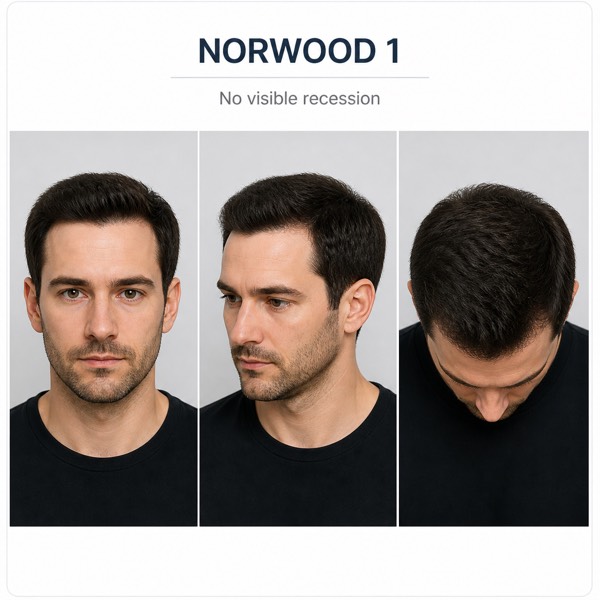
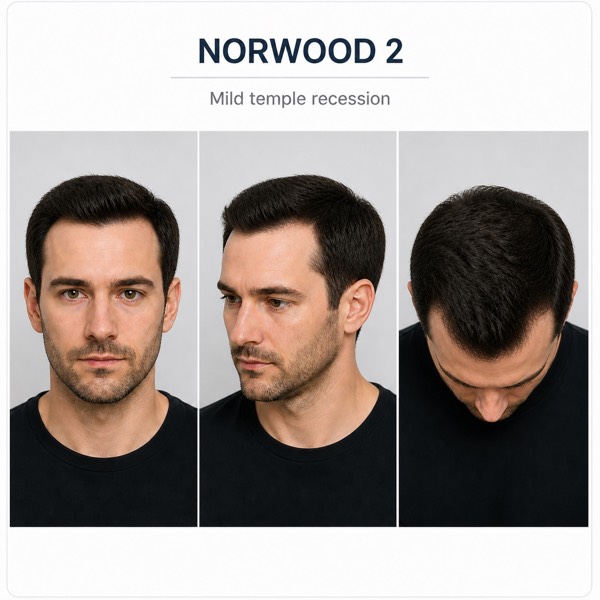
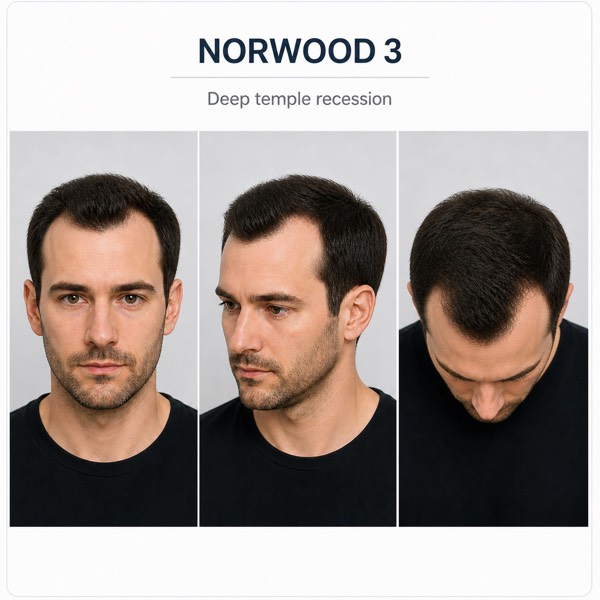
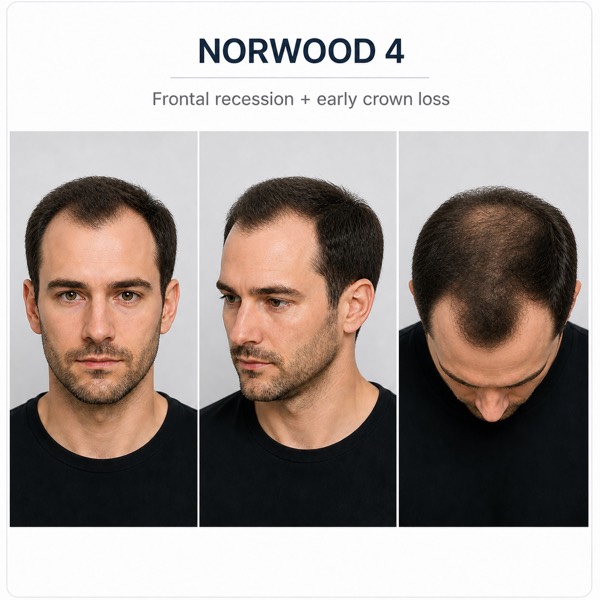
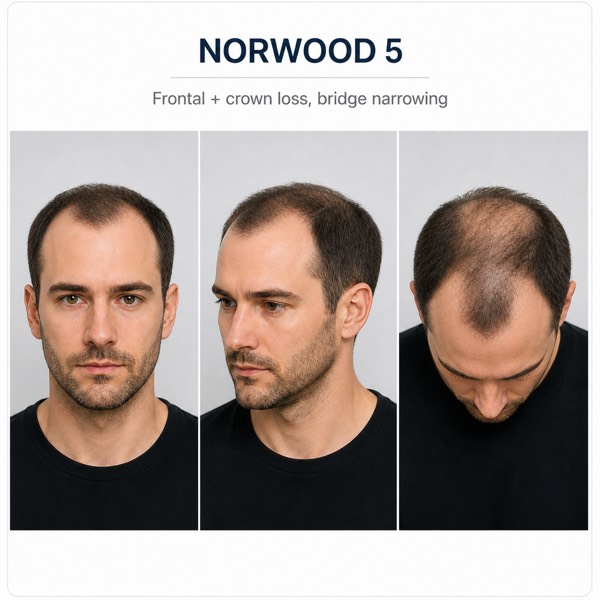
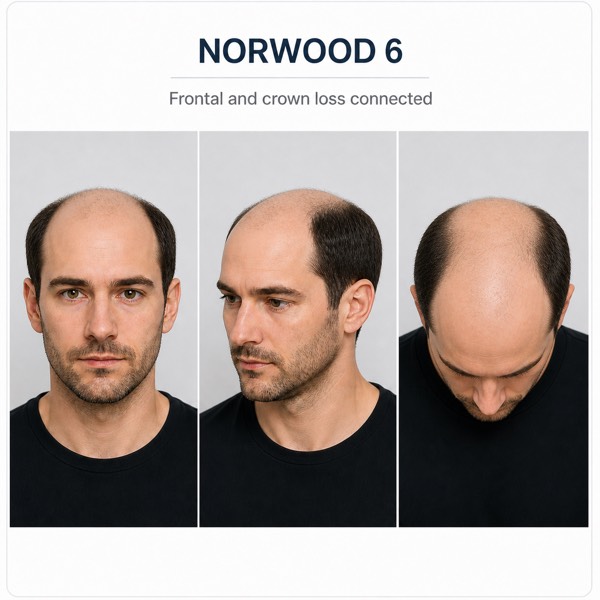
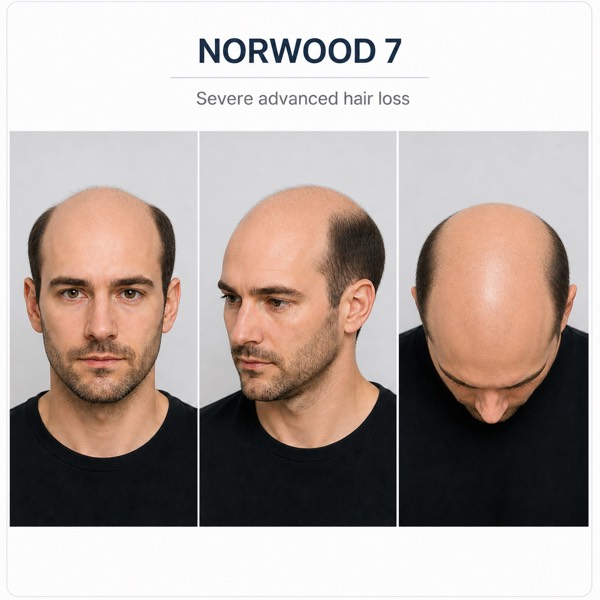
Patients at Norwood Stage 7 often lack sufficient lifetime donor capacity (typically limited to 5,000-7,000 grafts) to achieve full, dense coverage across the entire scalp.
In such advanced cases, ethical surgeons adopt a strategic approach: they prioritize restoring the frontal hairline and mid-scalp to frame the face, while leaving the crown natural. Attempting 100% coverage often leads to severe donor overharvesting.
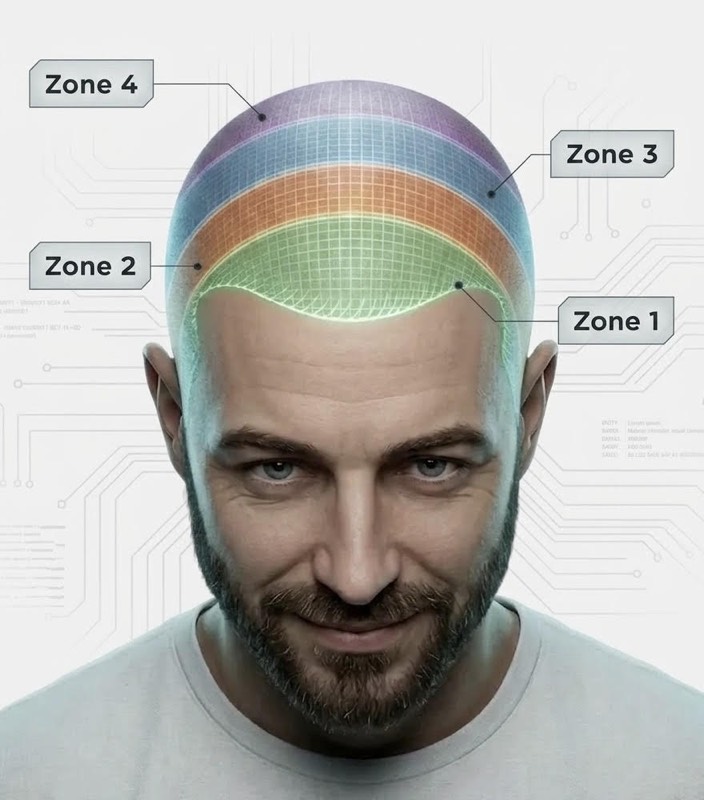
Graft Requirements by Scalp Zone
Graft estimates are calculated based on the target density and the surface area of each anatomical zone.
- Zone 1: Frontal Hairline 1,700 – 2,100
- Zone 2: Mid-Scalp Anterior 400 – 600
- Zone 3: Mid-Scalp Posterior 700 – 800
- Zone 4: Crown / Vertex 1,000 – 3,000
4 Factors That Change Your Graft Need
- Donor Area Capacity: The safe lifetime extraction limit is 5,000 to 7,000 grafts. Exceeding this can damage the donor area.
- Hair Thickness (Caliber): Thicker hair shafts cover more surface area, requiring fewer total grafts.
- Hair Texture: Wavy or curly hair naturally creates more volume and better coverage than straight hair.
- Color Contrast: High contrast (e.g., dark hair on pale skin) makes thinning more visible, often requiring denser packing.
Grafts vs. Hairs: What's the Difference?
A common misconception is that one graft equals one hair. In reality, a "graft" is a follicular unit that naturally contains 1 to 4 hairs.
This means a 2,000 graft procedure will typically yield between 4,000 and 4,600 individual hairs, depending on your natural hair groupings[1].
The Danger of "Mega Sessions" (Overharvesting)
You may see clinics advertising "5,000+ grafts in a single session". This is highly risky. Regardless of the clinic or cost, safely extracting and transplanting such high numbers in a single day is very rarely possible without compromising graft survival. The human donor area typically only holds a safe lifetime limit of 5,000 to 7,000 extractable grafts.
Extracting too many grafts at once causes Overharvesting (often requiring complex corrective revision surgery), leaving the back of your head looking patchy, moth-eaten, or permanently scarred. If you need 5,000+ grafts, a reputable surgeon will always divide the procedure into two sessions spaced 8-12 months apart to protect your donor zone.
Frequently Asked Questions
Can I get 5,000 grafts in one session? +
While technically possible, it is highly discouraged. Extracting 5,000 grafts in a single day significantly increases the time follicles spend outside the body, lowering their survival rate. It also drastically increases the risk of donor area necrosis and overharvesting.
How many grafts do I need for just my hairline? +
To restore a receding hairline and fill in the temples (typically Norwood 2 or 3), you will usually need between 1,500 and 2,000 grafts. This allows the surgeon to pack the grafts tightly, creating a high-density, natural-looking frontal barrier.
What happens if my donor area is weak? +
If your occipital donor area (back of the head) lacks the necessary density, a surgeon may supplement the procedure using grafts extracted from the beard (chin and neck area). General Body Hair Transplantation (from the chest or back) is rarely recommended because those hairs have different characteristics and much lower survival rates. However, if your overall donor capacity is too low, you may not be a candidate for a full restoration.
Sources & References
[1] Jimenez, F., & Ruifernández, J. M. (1999). Distribution of human hair in follicular units: a mathematical model for estimating the donor size in follicular unit transplantation. Dermatologic Surgery, 25(4), 294–298.
Next Step: Your Personalized Analysis
Upload your photos, get an expert graft estimate, compare global costs, and preview your transformation — all in just 30 seconds.
Start My Free Analysis →